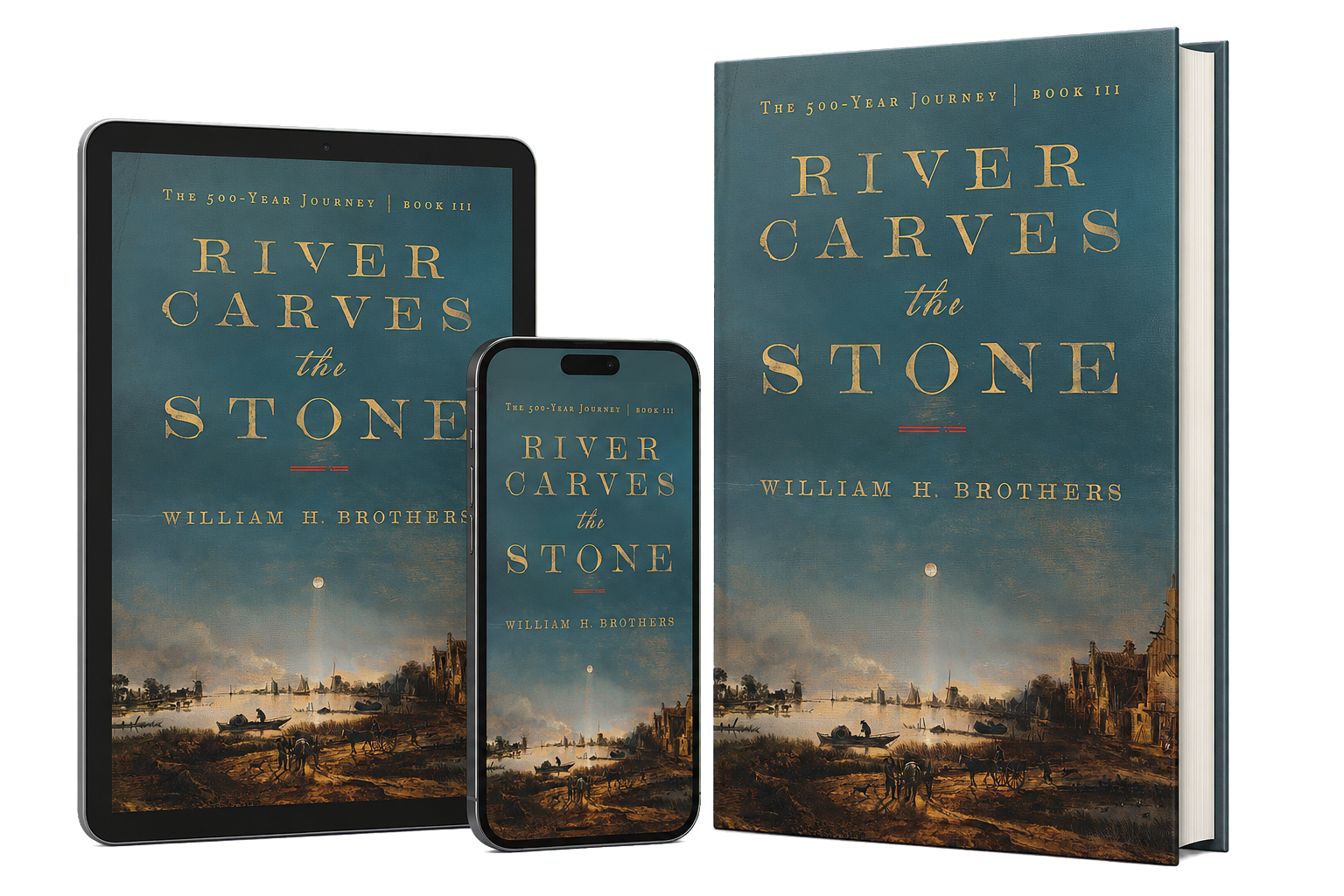
The River Carves the Stone
Book III in The 500-Year Journey Series
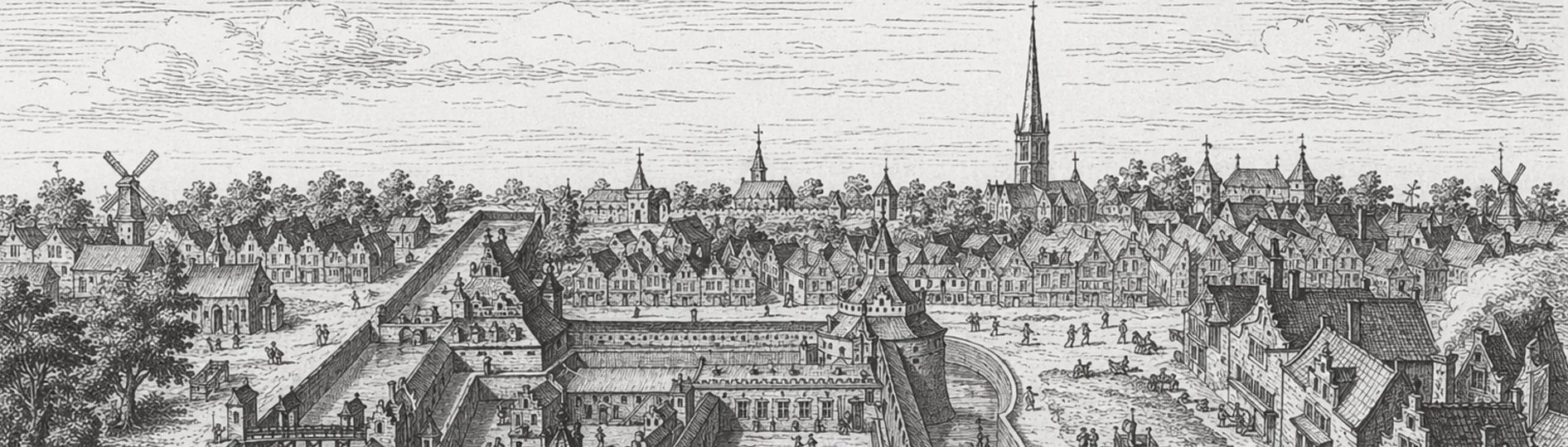
New Netherland, 1638.
The Schutt family crossed an ocean to escape the old world. But the new world keeps its own ledgers.
Jan Willemszen Schutt — called Hawk by those who cannot hold his Dutch name — arrives in New Amsterdam with tools, debts, children, and a wife who sees danger before he can name it. The Atlantic has taken enough from them already. Now the West India Company measures every mouth, every nail, every name, and every man by what he can produce.
The river promises land. It also promises exposure.
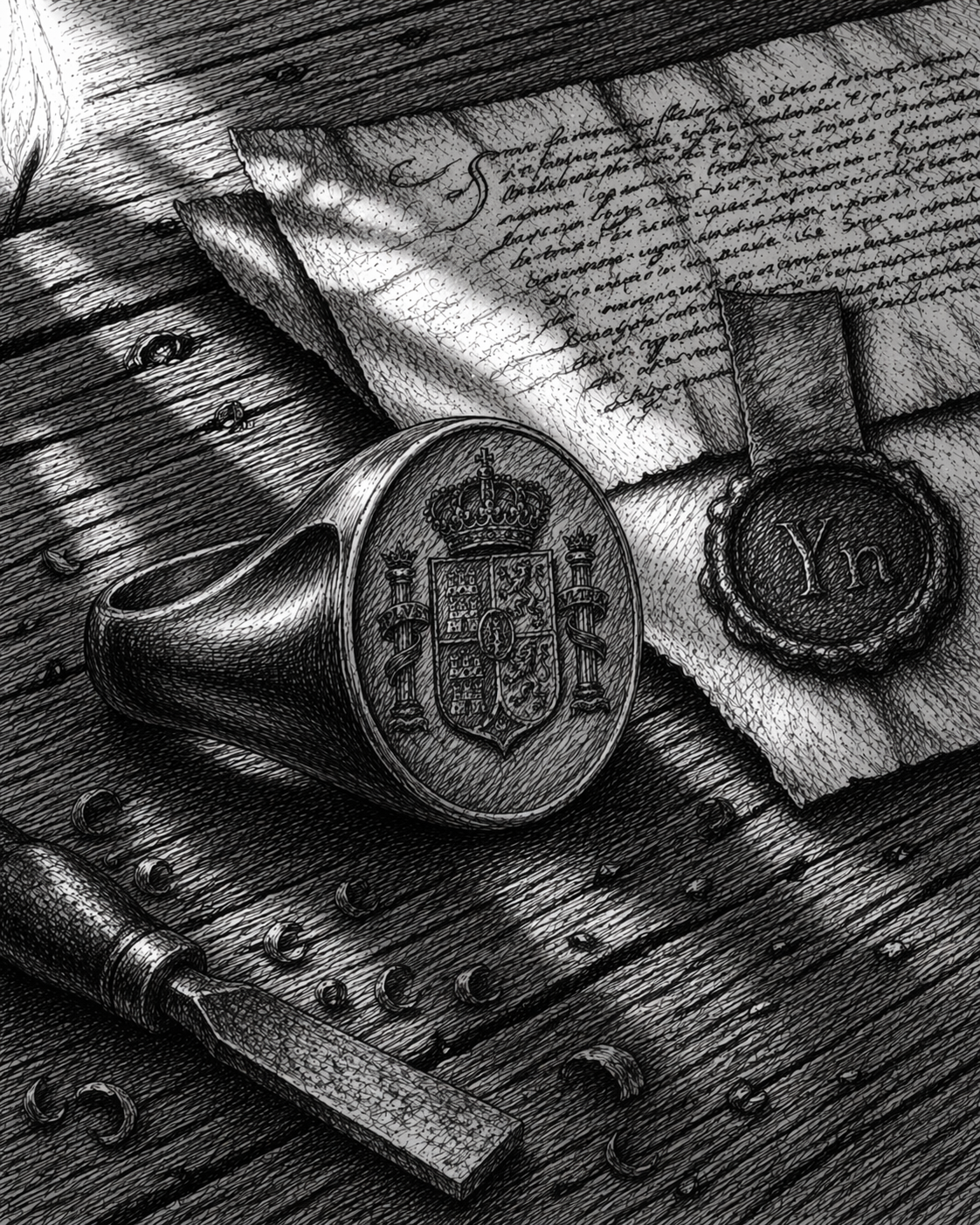
Beyond the palisades, patroon claims cut through Mohawk paths, traders bargain over hunger, and war waits in the trees. A wrong signature can cost a household its ration. A missing hinge can become an accusation. A clerk’s ink can make a man vanish as surely as a blade.
Hawk wants to believe work will root his family. He wants to believe fairness matters in a place where survival is bought by obedience, silence, and useful hands.
But the river does not care what a man was called before he crossed.
As New Netherland hardens around trade, land, and fear, Hawk must choose between invisibility and standing, safety and justice, the life he can protect and the name his children may inherit.
Rich in frontier danger, family stakes, and historical atmosphere, The River Carves the Stone is a gripping historical thriller about survival, identity, land, and the cost of beginning again.
The fire burned. The debt was counted.
Now the river takes its due.
Excerpt…
The Dolphine did not scream when she broke. She groaned—a long, low sound of wood sliding against wood that had forgotten how to hold. Then came the rush: the sound of the Atlantic pouring into the dark.
Hawk didn’t wait for the Captain’s order. He grabbed his tool chest and dropped into the waist-deep water of the lower hold. The air stank of bilge and old rot. Beside him, Roelof Swaen—sober for the first time in weeks—held a lantern high. Its yellow light skittered over the rising black pool.
“There!” Roelof shouted, pointing toward the forward knee.
A seam had opened three inches wide. The ocean was pulsing through it like blood from a severed vein.
“Wedges!” Hawk roared.
Above them, on the dry deck, he could hear the scratch of a quill. Van der Donkerwoude was already drafting the report, citing ‘unavoidable structural fatigue’ to protect the Company’s ledger.
Hawk ignored the ghosts of the law. He dived.
The water took his breath, cold as a knife. Beneath the surface, he felt for the crack with his bare hands. The wood was jagged, splintering under the weight of the sea. He rose, gasping, and slammed a tallow-rubbed wedge into the gap. He swung the mallet with the fury of a man who refused to let his son’s story end in a clerk’s footnote.
Strike. Strike. Strike.
Above, Grietje’s voice cut through the panic. She wasn't praying; she was commanding. “Pass the buckets! If the line stops, we die! Move!”
Hawk slammed the final iron brace home just as a massive swell hit the hull. The ship shuddered. The timber shrieked. But the brace held.
When Hawk finally climbed back onto the main deck, his hands were shredded, red with salt and blood. Little Willem stared at him, eyes wide with a terror that would never fully leave him.
The Captain stepped forward, adjusting his coat. “The situation is under control,” the officer announced.
But no one looked at the Captain. They looked at Hawk, standing dripping and silent by his tools. They looked at the man who had fought the water and won.