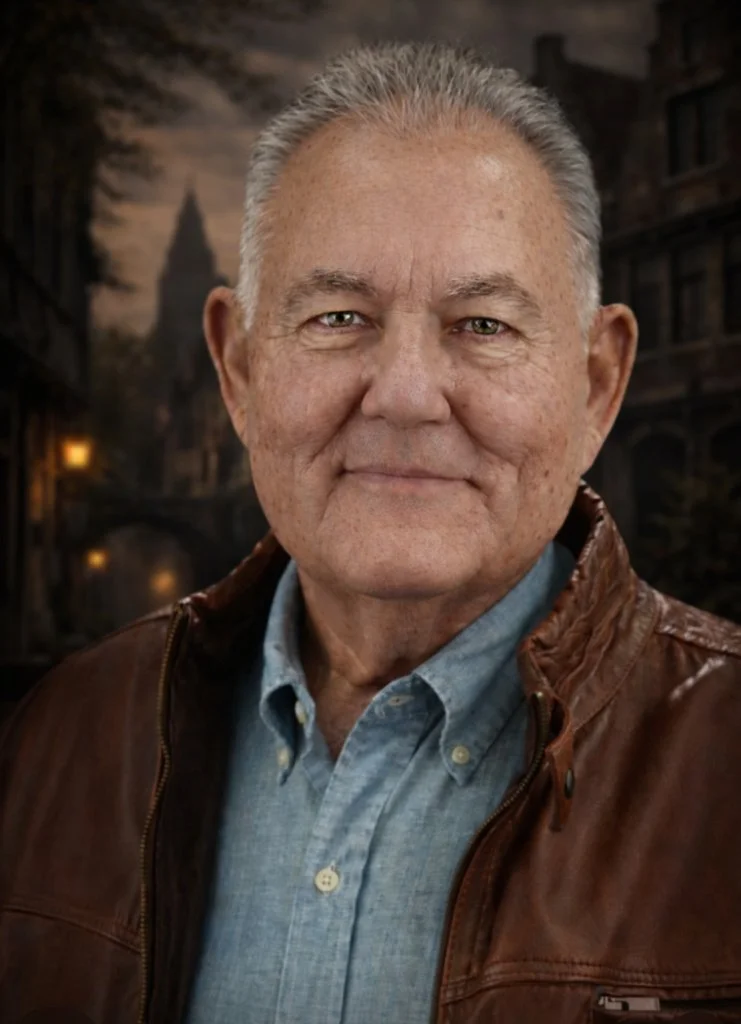
About William H. Brothers
Author, Entrepreneur, Broadcaster, Preservationist
Before writing The Night the Bells Burned - The 500-Year Journey,
William H. Brothers spent much of his life building, collecting, restoring, preserving pieces of the past, and serving his community.
A graduate of the University of Florida, Brothers began his professional life in sales, life insurance, architecture, and real estate before moving into broadcasting, entrepreneurship, investment, land development, and historical preservation. Through each field, one concern kept returning: families need places to live, belong, and prosper. Not simply houses, but homes.
That belief has made the work of Habitat for Humanity especially meaningful to him, including his role as founder of the Indiantown, Florida chapter. For Brothers, a home is more than shelter. It is a foothold against loss, a place where memory gathers, children feel safe, faith blooms, and families begin to believe in tomorrow.
As a broadcaster and entrepreneur, Brothers owned and operated television and FM radio stations across the United States. His stations carried Warner Brothers, TV Azteca, news, sports, public affairs, Christian radio, political debates, environmental programming, charity telethons, Spanish, and local events. At their best, they gave communities a voice.
Again and again, the enemy was the same: neglect. Things disappear when no one notices. Places suffer when no one speaks. Records vanish. Films decay. Machines rust. Families scatter. Stories are lost.
That instinct to notice, protect, and preserve led Brothers to assemble a vintage moving-image collection of more than 1,200 titles released between 1908 and 1963. The collection included early films, newsreels, musical shorts, cartoons, silent-era works, westerns, dramas, comedies, mysteries, science fiction, war films, family films, and early American motion pictures.
In 2006, Brothers donated the collection, appraised at $6.4 million, to the George A. Smathers Libraries at the University of Florida so the films could be protected, studied, and preserved for future generations. The University of Florida later named the collection in his honor as the Bill Brothers Moving Image Collection.
For Brothers, those films were never merely entertainment. They were evidence. They showed how people dressed, spoke, laughed, feared, dreamed, and misunderstood one another. They preserved skylines, songs, prejudices, news, manners, fashions, and the fragile record of ordinary American life. As he once said of early film, even something as simple as Flash Gordon reveals “the past guessing at our future.”
That same preservation impulse continues in his work with historic automobiles and machines, including century-old cars, trucks, motorcycles, and equipment. Each one carries a record of movement, labor, design, ambition, and American imagination of a future, now long since passed.
The same eye for visible history shapes his forthcoming six-book series, The 500-Year Journey, which follows one family through faith, war, migration, love, loss, and survival across five centuries. Brothers writes history from the ground up. He is interested in what people fought for, feared, carried, repaired, protected, believed, and passed on.
His novels are written for readers who love richly human historical fiction, grounded detail, emotional truth, and stories where courage is often quiet before it becomes visible.
Brothers lives in Florida with his wife and young family. He continues to write about war, faith, sacrifice, family, endurance, and the eternal cost of freedom.